Thursday, 15 May 2014

Imran farhat

Imran farhat Biography

source:(google.com)

Born May 20, 1982, Lahore, Punjab
Current age 31 years 271 days
Major teams Pakistan, Biman Bangladesh, Habib Bank Limited, ICL Pakistan XI, Lahore, Lahore Badshahs, Lahore Eagles, Lahore Lions, Pakistan Reserves
Also known as Romi
Batting style Left-hand bat
Bowling style Legbreak
Relation Father-in-law - Mohammad Ilyas, Brother - Humayun Farhat

Farhat made his senior debut aged 15 in a one-day match for Karachi City against Malaysia, together with three other players who went on to play Test cricket (Taufeeq Umar, Bazid Khan and Kamran Akmal). Three years later, in February 2001, Farhat made his One Day International debut, against New Zealand in Auckland, scoring 20 runs in a chase of 150 to win. After the tour of New Zealand, where Farhat played three Tests and three ODIs, he was sent back to domestic cricket before returning against Australia in the third Test of the 2002–03 series, where he made 30 and 22 in an innings defeat. However, he was retained for the home two-Test series against South Africa in 2003–04, where he scored 235 runs including a maiden Test century in a 1–0 series win, second behind fellow opener Taufeeq Umar.


A month later, Farhat played in an ODI-only series against New Zealand, which Pakistan won 5–0, and Farhat made three fifties along with his second international century, ending with 348 runs at a batting average of 69.60, once again the second-highest amount of runs – this time behind Yasir Hameed. The season was rounded off with another century, this time against India, where he made 101 to help Pakistan gain a 202-run first-innings lead and eventually won the match by nine wickets. However, Farhat tallied 81 runs in the other two matches, which Pakistan lost to lose the series 1–2.

Farhat was less impressive the following season, however, and in four Tests, two against Sri Lanka and two against Australia, he only passed fifty twice, ending the season with 199 runs at 24.87 before the selectors left him out for the third Test of the series with Australia. In September 2004, just before the 2004–2005 season, he had been dropped from the ODI side following the 2004 Champions Trophy, as he had failed to pass 40 with any of his last ten innings, and that included 38 not out against the non-Test nation of Kenya, 20 against ODI debutants Hong Kong and 24 against Bangladesh.

He continued to score heavily in the domestic competitions and a century in a practise game against the visiting Indian team was rewarded with a place in the squad to take on India in the Test series (2006). He returned to Test cricket in style, with an important half century in the deciding third Test at Karachi. He scored a brilliant unbeaten century in the final test against New Zealand in 2009. His brother Humayun Farhat has also played International cricket for Pakistan.


Career statistics

Test debut New Zealand v Pakistan at Auckland, Mar 8-12, 2001 scorecard
Last Test South Africa v Pakistan at Centurion, Feb 22-24, 2013 scorecard
Test statistics

ODI debut New Zealand v Pakistan at Auckland, Feb 17-18, 2001 scorecard
Last ODI Pakistan v South Africa at Birmingham, Jun 10, 2013 scorecard
ODI statistics

T20I debut Australia v Pakistan at Melbourne, Feb 5, 2010 scorecard
Last T20I Bangladesh v Pakistan at Dhaka, Nov 29, 2011 scorecard
T20I statistics

First-class debut 1998/99
Last First-class National Bank of Pakistan v Habib Bank Limited at Islamabad, Jan 22-25, 2014 scorecard
List A debut 1997/98
Last List A National Bank of Pakistan v Habib Bank Limited at Islamabad, Jan 27, 2014 scorecard
Twenty20 debut Karachi Dolphins v Lahore Lions at Lahore, Apr 25, 2005 scorecard
Last Twenty20 Faisalabad Wolves v Lahore Eagles at Rawalpindi, Feb 11, 2014 scorecard

Recent matches

Bat & Bowl Team Opposition Ground Match Date Scorecard
23 L Eagles v Wolves Rawalpindi 11 Feb 2014 T20
2 L Eagles v P Panthers Rawalpindi 10 Feb 2014 T20
4 L Eagles v Leopards Rawalpindi 7 Feb 2014 T20
2 Habib Bank v National Bnk Islamabad 27 Jan 2014 LA
40, 59 Habib Bank v National Bnk Islamabad 22 Jan 2014 FC
0/28, 10 Habib Bank v ZTBL Lahore 19 Jan 2014 LA
1/29, 0* Habib Bank v ZTBL Lahore 14 Jan 2014 FC
0 Habib Bank v Pakistan TV Lahore 11 Jan 2014 LA
300*, 2/4 Habib Bank v Pakistan TV Lahore 6 Jan 2014 FC
0/11, 35 Habib Bank v Sui Gas Lahore 3 Jan 2014 LA

A gifted young left-handed opener who threatened at one stage to solve Pakistan's perennial opening conundrum, Imran Farhat had a brief spell in the Pakistan side after success with the national under-19 and A sides. Farhat also evokes Saeed Anwar but only fleetingly; he bludgeons rather than times his runs. He was rather too cavalier in his early appearances in the Test arena, and was promptly discarded after the tour to New Zealand in 2000-01. However, he tightened his game and achieved much more success in the 2003-04 season. Tempering his impressive array of shots with better defensive technique, Farhat scored a deluge of runs in the home series against South Africa and New Zealand, being involved in a record four successive hundred partnerships with Yasir Hameed in the one-day internationals against New Zealand. He also notched up his first century in both Tests and ODIs during this season, and then went on to score a vital 101 in Pakistan's victory against India in the Lahore Test. But since the India series, he has fallen away. A mediocre series at home to Sri Lanka and away to Australia saw him falter, especially with the emergence of the other left-handed opener, Salman Butt. When Pakistan included only one specialist opener in the squad for the series against England in 2005 - Butt - seemingly it confirmed that Farhat, temporarily, was out of national reckoning. But as an opener in Pakistan, you are never out of national reckoning and sure enough Farhat was back for the final Test against India, where he scored a fifty. That performance saw him on the plane to Sri Lanka and an average series. But with openers becoming as rare as dinosuars in Pakistan, he was retained for the summer tour to England, where he again produced some mixed results. Despite failures in the first two Tests, a broken finger and a spate of dropped catches, he came back to score a cavalier 91 in the final, fateful Oval Test. Runs against West Indies at home were followed by a barren patch in South Africa. A first away hundred followed by a patient half-century in the Napier Test of 2009 has set him up for a long sojourn in the Test side. His ODI career has however hit roadblocks since he was dropped after an indifferent run of scores in 2006.


Imran farhat
Imran farhat
Imran farhat
Imran farhat
Imran farhat
Imran farhat
Imran farhat
Imran farhat
Imran farhat
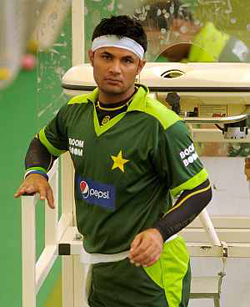
Imran farhat
Imran farhat

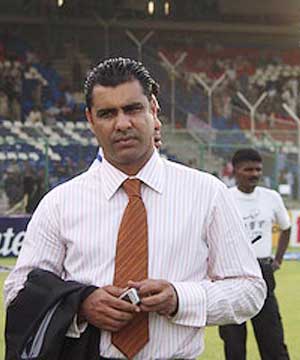
Waqar Younis

Waqar Younis Biography

source link (google.com)

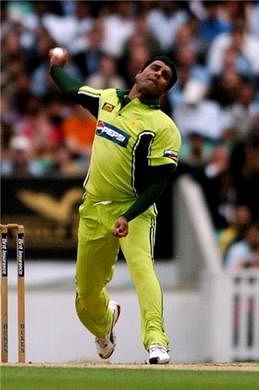
Waqar Younis Maitla (born November 16, 1971) is a famous Pakistani cricketer from Burewala, Punjab, and one of the greatest bowlers the game has known. He attended Pakistani College, Sharjah and Government College, Vehari. Playing as a fast bowler, he took 373 Test wickets and 416 wickets in One-day Internationals. He debuted for Pakistan against India on November 15, 1989. It is noteworthy that Sachin Tendulkar debuted in the same match. His most lethal weapon was the in-swinging yorker, which he managed to produce at will and with a high degree of accuracy, as experienced first-hand by plenty of county batsmen who were unfortunate enough to face him at his peak.
Known as the "Burewala Bombshell", Waqar formed one half of the legendary fast bowling partnership with Wasim Akram. At his peak, most were of the view that there was no better bowler, especially with regards to wicket-taking ability and being penetrative. His tendency to aim for the stumps earned him the highest strike rate of all time, among the bowlers with 200 or more wickets. His blistering pace and toe-crushing yorkers put tremendous fear in the batsmen. Much was expected of him but he stayed out of the team for quite a long time to do his talents and fans justice because of his controversial conflicts with once bowling partner and captain Wasim Akram. His comeback, however, came with him being appointed the Captain of the national side - which he remained so till his side failed to make an impact in the 2003 World Cup. He was forced to retire as the Pakistan Cricket Board persistently ignored him for national selection.
Waqar was one of a long line of Pakistanis (starting with Safraz Nawaz) who mastered the art of reverse swing. It was his partnership with Wasim Akram that took this art to new levels, and their 1992 series versus England will forever be remembered as their signature series. Many sections of the English media could not fathom how an old ball could swing so much and so late, and this led to cries of foul play and the infamous allegations of "ball-tampering" from some quarteres. The passage of time, coupled with the fact that England now have their own reverse swing bowlers, has led to an appreciation of the science and skill behind reverse swing, and most now accept that Waqar was simply ahead of his time.
Waqar Younis is cited alongside Wasim Akram, Allan Donald, Glenn McGrath, Walsh and Ambrose as the best fast bowler of the 90s. While his contemporaries, Donald and McGrath, played most of their cricket on the fast and bouncy tracks of South Africa and Australia, backed up by the spectacular fielding sides, Waqar Younis, on the other hand, had to contend with the slow and docile tracks of the sub-continent, backed by a fielding side that had nothing so distinguished to write about. An astonishing number of Waqar's wickets have been clean bowled or have come from leg-before decisions showing how much he has had to depend on his own efforts to get his batsmen. He will be known for his attacking bowling as against the "line n' length" bowling of the most of his peers. He bowled one of his best balls to Brian Lara, another cricketing legend, which ended with Lara on the ground, his stump flipped 6 feet away. Waqar Younis has some outstanding records. He is the only bowler who has taken 5 wicket haul in 3 consecutive ODIs. He has taken 4+ wickets on 27 occasions in ODIs, which is a record. He has also taken the fastest 50, 300, 350 and 400 wickets in ODI matches and in test matches he has taken the fastest 150, 200, 250, 300, 350 wickets by lesser number of balls bowled.
Although primarily a bowler, Waqar hit 1010 Test runs; he is in fact (as of September 2005) the only man to pass the thousand mark without ever scoring a fifty. He is now married with a son and a daughter. Recently, he has become a television cricket commentator for Australia's Nine Network since a series against Australia and Pakistan.

Waqar Younis
Wasim Akram
Wasim Akram
Wasim Akram
Wasim Akram
Wasim Akram

Wasim Akram
Wasim Akram
Wasim Akram
Wasim Akram
Wasim Akram

Wasim Akram

Wasim Akram Biography

source link (google.com)

Full name Wasim Akram
Born June 3, 1966 Lahore, Punjab, Pakistan
Height 6 ft 2 in (1.88 m)
Role Bowler
Batting style Left-handed
Bowling style Left-arm fast
International information
Test debut (cap 102) 25 January 1985: v New Zealand
Last Test 9 January 2002: v Bangladesh
ODI debut (cap 53) 23 November 1984: v New Zealand
Last ODI 4 March 2003: v Zimbabwe
Domestic team information
Years Team
2003 Hampshire
2000/01 Lahore Blues
1992/93 – 2000/01 Pakistan International Airlines
1988 – 1998 Lancashire
1997/98 Lahore City
1985/86 Lahore City Whites
1984/85 – 1985/86 Pakistan Automobiles Corporation

Wasim Akram (Urdu: وسیم اکرم)(born June 3, 1966 in Lahore, Punjab) is a former Pakistani cricketer. He was a left-arm fast bowler and left-handed batsman, who represented the Pakistani cricket team in Tests and One-Day Internationals. He is widely regarded as one of the finest fast bowlers ever and holds world records for the most wickets taken in both ODIs (502) and List A cricket (881). Domestic career
Wasim signed for Lancashire in 1988 and went on to become one of their most successful overseas players. From 1988 to 1998, he spearheaded their attack in their NatWest Trophy, Benson & Hedges Cup and Sunday League winning sides. He was a favourite of the local fans who used to sing a song called "Wasim for England" at Lancashire's matches.
Wasim made his Test debut for Pakistani cricket team against New Zealand in early 1985 and in only his second Test he made his presence felt with a ten-wicket haul. Like a few other Pakistani cricketers of his time, he was identified at club level and bypassed first-class domestic competition, entering international cricket directly. A few weeks prior to his selection into the Pakistani team, he was an unknown club cricketer who had failed to even make it to his college team. He was spotted by Javed Miandad, and as a result of his insisting was it that Wasim was given an oppurtunity to play for Pakistan. Later that season he paired with Imran, who became his mentor, at the World Championship of Cricket in Australia.Wasim's rise in international cricket was rapid during the initial years. When Pakistan toured the West Indies in 1988, he looked to be the quickest bowler between the two sides. However, a serious groin injury impeded his career in the late 1980s. Following two surgeries, he re-emerged in 1990 as a bowler who focused more on swing and control than speed.
Wasim was instrumental in Pakistan's famous World Cup victory in 1992 in Australia. In the final against England his late flurry of an innings, 33 off 19 balls, pushed Pakistan to a respectable 249 for 6. Wasim then took the all-important wicket of Ian Botham early on, and when brought back into the attack later on, with the ball reverse swinging, he produced a devastating spell which led to Allan Lamb and Chris Lewis being clean-bowled in successive deliveries. His excellent performances earned him the Man of the Match award for the final.He also captained Pakistan with some success. The high points of his captaincy were the 1996-97 victory in the World Series in Australia, two Test match wins in India in 1998-99 and in 1999, when Pakistan reached the World Cup final for the second time. The low point was the 1996 World Cup in Pakistan and India, when he had to pull out of the crucial quarter final match against India. After Pakistan's defeat, there were angry protests outside his homes, and a government inquiry was launched into the failure.In 1999, he led Pakistan to the brink of victory in the World Cup before they rolled over and gave the final to Australia. This was the start of the match-fixing controversies, as people believed Wasim had set up the match for Australia. He was pardoned by Justice Qayyum.

He was Pakistan's top bowler in the 2003 World Cup taking 19 wickets in 7 matches. However, Pakistan failed to reach the "Super Six" phase of the tournament, and Wasim was one of the eight players to be sacked by the Pakistan Cricket Board as a result.
Wasim retired in 2003, after a brief spell with Hampshire in England. Since then, Wasim has taken up commentary and can currently be seen as a sportscaster for the ESPN Star network, and is also running shows on ARY Digital.He is married to Huma Mufti, daughter of Mr. Humayaun Mufti. Huma and Wasim have two sons from their marriage of thirteen years.


Wasim Akram
Wasim Akram
Wasim Akram
Wasim Akram
Wasim Akram
Wasim Akram
Wasim Akram
Wasim Akram
Wasim Akram
Wasim Akram
Wasim Akram

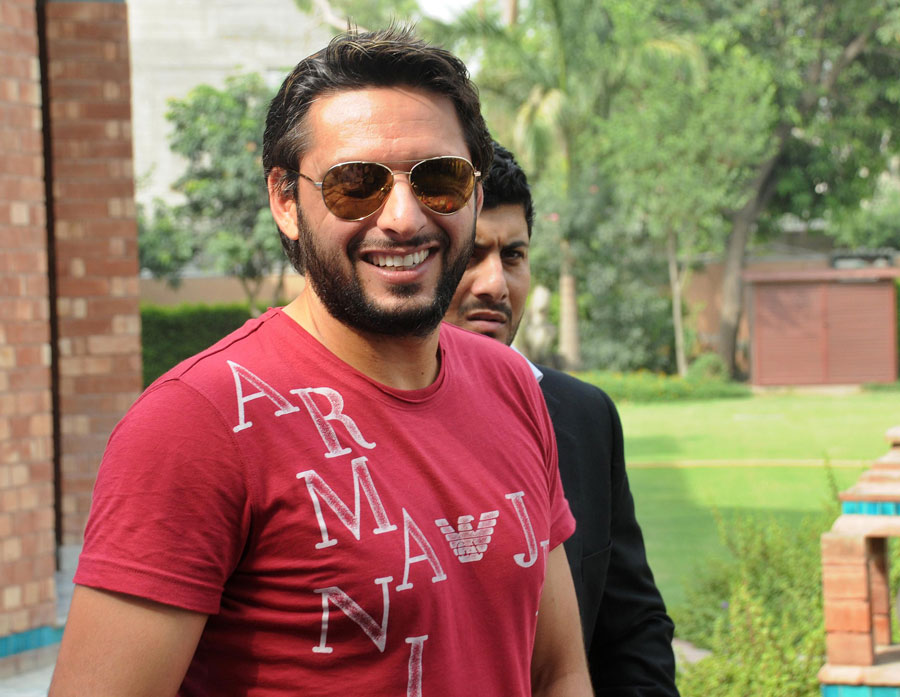
Shahid Afridi

Shahid Afridi Biography

source link (google.com) 

Shahid Khan Afridi, Cricketers is famous for Cricket, Pakistani celebrity. Born on 1 March, 1980

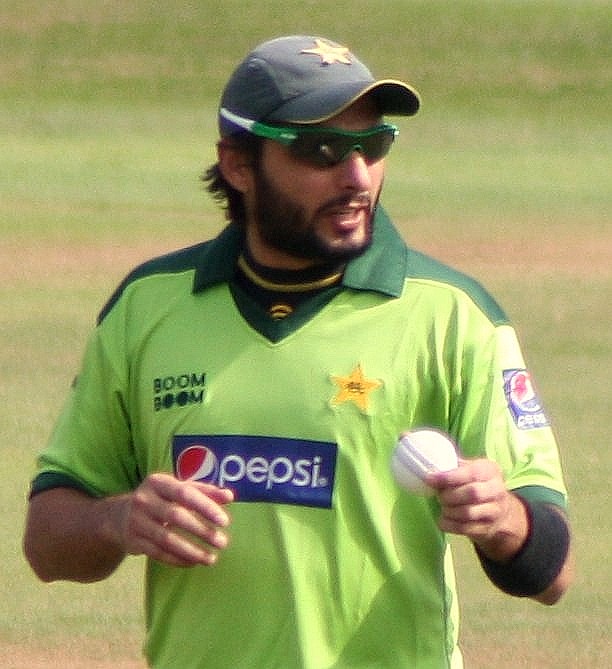
Sahibzada Mohammad Shahid Khan Afridi born in Khyber Agency of the Federally Administered Tribal Areas, Pakistan), popularly known as Shahid Afridi is a Pakistani cricketer. Between 1996 and 2011, Afridi played 27 Tests, 325 One Day Internationals, and 43 Twenty20 Internationals (T20Is) for the Pakistani national team. He made his ODI debut on 2 October 1996 against Kenya and his Test debut on 22 October 1998 against Australia.

He is known for his aggressive batting style, and holds the record for the fastest ODI century which he made in his first international innings, as well as scoring 32 runs in a single over, the second highest scoring over ever in an ODI. He also holds the distinction of having hit the most number of sixes in the history of ODI cricket. Afridi considers himself a better bowler than batsman, and has taken 48 Test wickets and over 300 in ODIs. Currently Afridi is the leading wicket taker in the Twenty20 format taking 53 wickets from 43 matches.

In June 2009 Afridi took over the Twenty20 captaincy from Younus Khan, and was later appointed ODI captain for the 2010 Asia Cup. In his first match as ODI captain against Sri Lanka he scored a century however Pakistan still lost by 16 runs. He then also took over the Test captaincy but resigned after one match in charge citing lack of form and ability to play Test cricket; at the same time he announced his retirement from Tests. He retained the captaincy in limited-overs form of the game and led the team in the 2011 World Cup. Amongst his highlights while captaining Pakistan include leading the team to their first ODI series win in two-years. In May 2011, having led Pakistan in 34 ODIs Afridi was replaced as captain. Later that month he announced his conditional retirement from international cricket in protest against his treatment by the Pakistan Cricket Board (PCB).

Afridi is from the Afridi tribe of the Khyber Agency in the Federally Administered Tribal Areas and hails from a Pashtun family. He is married and has two daughters, Aqsa and Ansha.

In October 1996 at the age of sixteen Afridi was drafted into the ODI team during the four-nation Sameer Cup 1996–97 as a leg spinner as a replacement for the injured Mushtaq Ahmed. He made his debut on 2 October against Kenya, however he didn't bat and went wicketless. In the next match against Sri Lanka, Afridi batted at number three in the role of a pinch-hitter. In his first international innings, Afridi broke the record for fastest century in ODI cricket, reaching his hundred from 37 balls. The eleven sixes he struck also equalled the record for most in an ODI innings. Aged 16 years and 217 days, Afridi became the youngest player to score an ODI century. Pakistan posted a total of 371, at the time the second-highest in ODIs, and won by 82 runs; Afridi was named man of the match.

Two years after appearing on the international scene, Afridi made his Test debut in the third game of a three-match series against Australia on 22 October 1998. By this point he had already played 66 ODIs, at the time a record before playing Tests. He opened the batting, making scores of 10 and 6, and took five wickets in the first innings. He played his second Test the following January during Pakistan's tour of India; it was the first Test between the two countries since 1990. Again opening the batting, Afridi scored his maiden Test century, scoring 141 runs from 191 balls. In the same match he also claimed three wickets for 54 runs. After winning the first match by 12 runs, Pakistan lost the second to draw the series.

In 2001, Afridi signed a contract to represent Leicestershire. In five first-class matches he scored 295 runs at an average of 42.14, including a highest score of 164, and took 11 wickets at an average of 46.45; Afridi also played 11 one day matches for the club, scoring 481 runs at an average of 40.08 and taking 18 wickets at 24.04. His highest score of 95 came from 58 balls in a semi-final of the C&G Trophy to help Leicestershire beat Lancashire by seven wickets.Derbyshire County Cricket Club signed Afridi to play for them in the first two months of the 2003 English cricket season. In June 2004 Afridi signed with English county side Kent to play for them in three Twenty20 matches and one Totesport League match.

Afridi made his presence felt in the third Test against India in March 2005, scoring a quick-fire second-innings half-century and taking five wickets in the match (including Tendulkar twice) to help Pakistan to win the game and register a series draw. In April Afridi struck what at the time was the equal second-fastest century in ODIs; he reached 100 off 45 deliveries against India, sharing the record with West Indian Brian Lara. Afridi was more consistent with his batting and bowling throughout 2005, starting with the tours of India and West Indies and through to the England tour. The Pakistani coach Bob Woolmer helped Afridi to reach a fuller potential by improving his shot selection and giving him free rein over his batting attitude.

On 21 November 2005, Shahid Afridi was banned for a Test match and two ODIs for deliberately damaging the pitch in the second match of the three-Test series against England. TV cameras pictured him scraping his boots on the pitch scuffing the surface when play was held up after a gas canister exploded. Afridi later pleaded guilty to a level three breach of the ICC code of conduct relating to the spirit of the game. Inquiries were made and Afridi's antics came into view. He was investigated and banned after the day's play, along with receiving a huge amount of criticism from the cricketing world for bringing the game into disrepute. Match referee Roshan Mahanama said: "This ban should serve as a message to players that this type of behaviour is not allowed." On this Afridi accepted his fault and said that a "senior player like me should set good examples to others because they see us to learn." His behaviour was also condemned by the Pakistan Cricket Board.

On 12 April 2006, Afridi announced a temporary retirement from Test cricket so that he could concentrate on ODIs, with a particular focus on the 2007 World Cup, and to spend more time with his family. He said he would consider reversing his decision after the World Cup. Afridi had played ten Tests since being recalled to the side in January 2005, averaging 47.44 with the bat including four centuries. However, on 27 April he reversed his decision, saying that "[Woolmer] told me that I am one of the main players in the team and squad and that Pakistan really needed me". Before Pakistan toured England in July to September, Afridi played for Ireland as an overseas player in the C&G Trophy. In six matches, he scored 128 runs and took seven wickets. England won the four-match Test series 3–0; Afridi played two matches, scoring 49 runs and took three wickets. It was the last Test cricket Afridi played until 2010.

Afridi was charged on 8 February 2007 of bringing the game into disrepute after he was seen on camera thrusting his bat at a spectator who swore at him on his way up the steps after being dismissed. Afridi was given a four-game ODI suspension, the minimum possible ban for such an offence, meaning that he would miss Pakistan's first two 2007 World Cup matches. The PCB and Afridi chose not to appeal the ban, despite feeling that the punishment was excessively harsh.

In the 2007 World Twenty20, he performed poorly with the bat but brilliantly with the ball, earning the Man of the Series award, though he failed to take a wicket in the final and was out for a golden duck.But in the next ICC Twenty20 World Cup, held in 2009 Afridi performed brilliantly in the series scoring 50 runs in the semi-final and 54 in the final and leading his team to victory.

On 30 May Afridi announced his conditional retirement from international cricket in protest against his treatment by the PCB. The condition on his return was that the board be replaced. The PCB suspended Afridi's central contract, fined him 4.5 million rupees ($52,300), and revoked his no-objection certificate (NOC) which allowed Afridi to play for Hampshire. Afridi filed a petition with the Sindh High Court to overturn the sanctions. On June 15, Afridi withdrew his petition after an out of court settlement and the PCB reinstated his NOC.

 Shahid Afridi

Shahid Afridi

Shahid Afridi

Shahid Afridi

Shahid Afridi

Shahid Afridi

Shahid Afridi

Shahid Afridi

Shahid Afridi

Shahid Afridi

Shahid Afridi